The Bookworms – Two Books This Time
By Ian Bentley and Gordon Cheyne
We missed the last Bulletin because one of the authors of this report was in Queensland. Since then, we have met to discuss another book. So here we report on both.
On the Bright Side: The new secret diary of Hendrik Groen
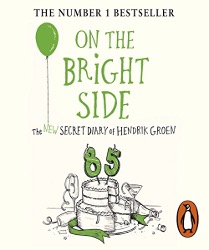
The RCH Bookworms gathered on September 11th to discuss On the Brighter Side: The New Secret Diary of Hendrik Groen. Most members had finished the book and agreed it was a delightful read—heartwarming, funny, and touching.
The book is written as a daily diary by 85-year-old Hendrik Groen, who refuses to settle into the quiet monotony of life in his Dutch retirement home. Tired of bingo nights and endless cups of tea, Hendrik starts the "Old-But-Not-Dead Club" with some fellow residents. Their group is small, limited by the seats in their trusty minibus used on their rebellious adventures, determined to live life on their own terms. Through Hendrik's witty and insightful observations, readers get a refreshing take on aging and the importance of finding joy in everyday moments.
As usual, the book sparked a larger conversation, touching on aging, community, and the need for connection. Members shared personal stories of elderly friends and family, highlighting how crucial social bonds and a sense of purpose are in later life. Lawrence shared his positive experience living in a retirement village, where there are many ways to stay mentally and physically active. Gordon spoke about the loneliness of those living alone following the death of a spouse and the value of lasting friendships. Jane, reflecting on her time visiting residents in aged care facilities, stressed the importance of initiatives that bring people together and promote engagement.
The discussion confirmed the importance of the book’s themes of empowerment and self-determination for older adults. Staying active and mentally engaged, rather than being passive recipients of care, is essential to thriving. Examples from the book are Hendrik’s jousts with the authoritarian rule of the retirement home’s director, the Old-But-Not-Dead Club’s organisation of community dinners, movie nights, a Christmas shopping trip to Germany, and sharing stories that all fostered a sense of independence, intellectual stimulation and camaraderie.
Some members identified favourite incidents from the book, such Hendrik’s best friend Evert's acceptance of his fate and Hendrik's encounter with a compassionate doctor, tying these moments to their own experiences. The conversation touched on a range of topics, from addiction to the delight found in small pleasures, emphasising the universal need for joy and connection and both reflecting on the past and looking forward to new experiences.
Ultimately, the Bookworms agreed that On the Brighter Side highlights an important message: aging isn’t just about decline. It’s about discovering new ways to live fully, staying connected with the world, and cherishing relationships that bring joy and meaning.
Corduroy Mansions
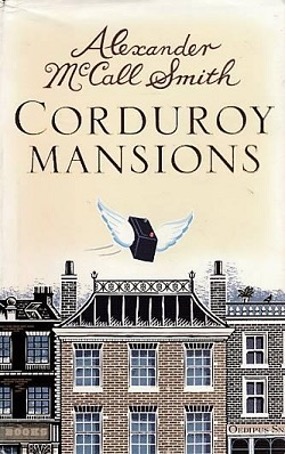 The Bookworms met by Zoom on Monday two weeks ago to discuss “Corduroy Mansions” by Alexander McCall Smith, who is the author of the international phenomenon The No. 1 Ladies' Detective Agency series, the Isabel Dalhousie Series, the Portuguese Irregular Verbs series, and the 44 Scotland Street series. He is professor emeritus of medical law at the University of Edinburgh and has served on many national and international bodies concerned with bioethics.
We found this to be an enjoyable and gentle book, easy to read. Jane noted the short chapters, and pointed out that The Corduroy Mansions series started life as a delightful cross-media serial, written on the website of the Telegraph Media Group.
This explained how we found it easy to pick up and read a little, and come back to it later, with some Bookworms skipping an odd chapter. A bit like “Mrs Dale’s Diary” or “The Bold and the Beautiful”: you could miss an episode and easily pick up the thread later.
Charl otte and Ian had fond reminiscences of living in the area, and Ian even managed to produce a photograph of a similar block of flats, with the Porsche 911 Carrera he was driving at the time. You have to read the book to get the relevance of the Porsche.
otte and Ian had fond reminiscences of living in the area, and Ian even managed to produce a photograph of a similar block of flats, with the Porsche 911 Carrera he was driving at the time. You have to read the book to get the relevance of the Porsche.The novel is set in a London residential section and a building complex called Corduroy Mansions. What makes this such a great read is that the characters are all a little crazy, even down to the vegetarian dog, Freddie de la Hay, a Pimlico terrier who insists on wearing a seat belt. One of the characters has a "near death" experience by charging his car's battery with bare wires and does not realise he needs a battery charger for the task. It is just one crazy event after another, told in that charming rather droll way that the English have.
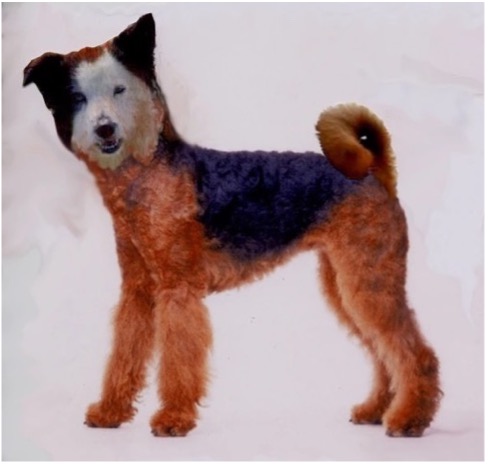 By the way, the author describes the Pimlico Terrier as “an unusual breed obtained through the judicious crossing of an Airedale with a Border Collie, and perhaps just a touch of something else about which the breeders themselves are now hazy.”
 While we all enjoyed the zany characterisations in “Corduroy Mansions”, none of us felt pressed to read the other books in the series.
Gordon expected something totally different from the author, having confused him with George MacDonald Fraser, another Scottish Author who wrote “The Steel Bonnets” and the Flashman series. Easy to confuse: they both have three names. (Do you remember Flashman, the school bully in “Tom Brown’s Schooldays”? The series is about his subsequent life. He was a real “chancer”)
 The Bookworms will meet again on Tuesday, 19th November, to discuss "Galileo’s Daughter”, by Dava Sobel.
Sobel illuminates the Florence of the Medicis and the papal court in Rome during the pivotal era when humanity's perception of its place in the cosmos was about to be overturned.
It is also a stunning portrait of Galileo's daughter, a person hitherto lost to history, described by her father as "a woman of exquisite mind, singular goodness, and most tenderly attached to me."
Filled with human drama and scientific adventure, “Galileo's Daughter” is an unforgettable story.